Watching The Ivory Game While Rhino Man Was Taking Shape
By John Jurko II, director of the documentary Rhino Man.
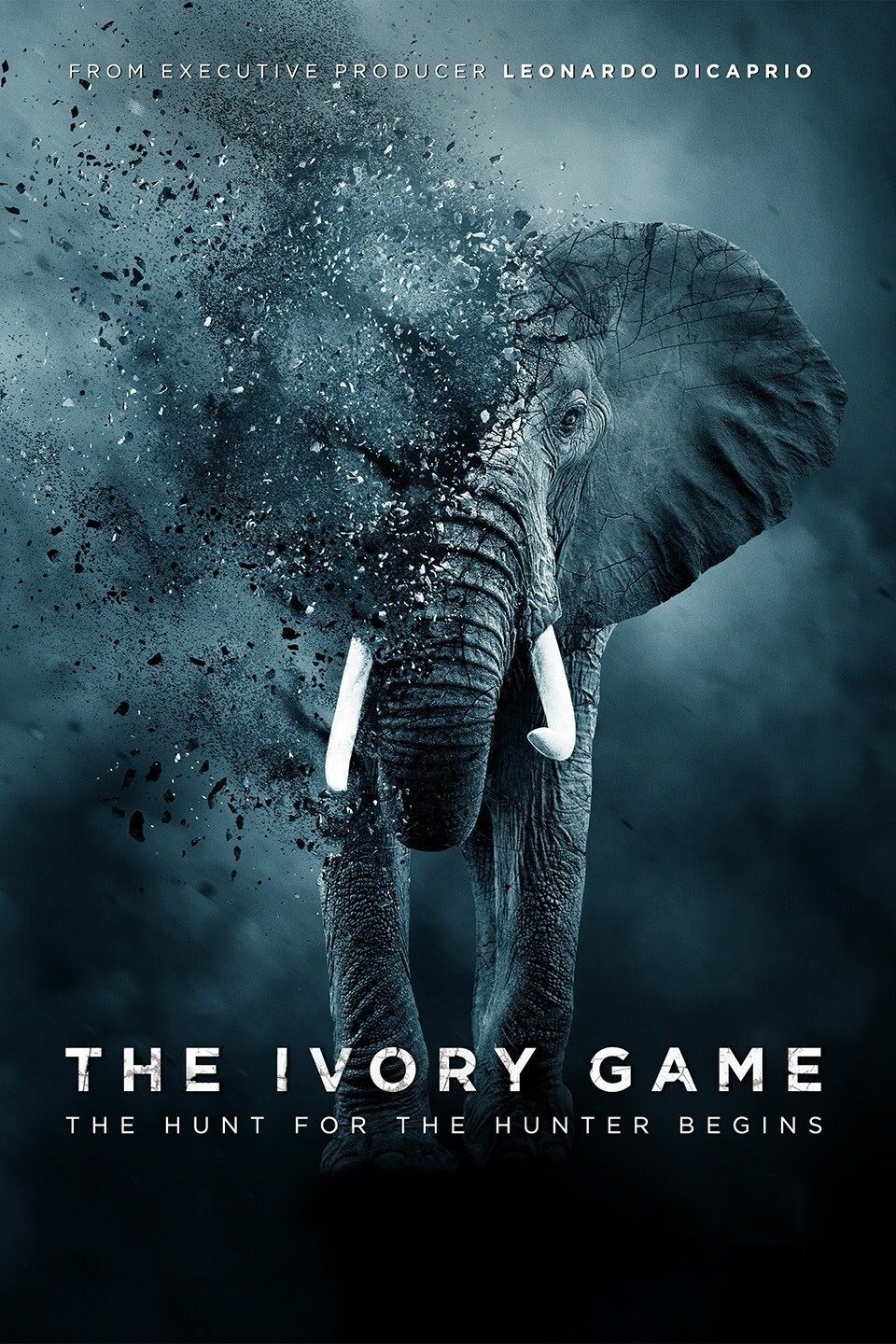
I watched The Ivory Game not long after it landed on Netflix, sometime around 2018, right in the middle of the years I was spending getting into this world and eventually making Rhino Man. What I remember most is how well it moved. It’s a tense film. Real, sustained tension, the kind that comes from good editing and a story that earns it, not from manufactured drama.
A lot of people who know I made a film about rangers assume I’ve seen every conservation documentary out there. I haven’t seen all of them, but The Ivory Game is one I have, and it’s stayed with me.
This is my honest take on it: what it does really well, and where I think Rhino Man picks up a different thread of the same fight.
What The Ivory Game Does Well
Film Facts:
Title:The Ivory Game (2016)
Directors: Richard Ladkani & Kief Davidson
Executive Producer: Leonardo DiCaprio
Focus: Undercover investigation into global ivory trafficking networks
Locations: Kenya, Tanzania, Zambia, China, Hong Kong, Vietnam
Runtime: ~112 minutes
Awards: WWF Golden Panda Award, Beijing International Film Festival Best Documentary, 2017 Academy Awards shortlist
The Ivory Game is built around the trafficking network itself, not just the poaching that feeds it. Richard Ladkani and Kief Davidson spent well over a year embedded with undercover investigators, following the ivory from the animal all the way to the buyer. That’s a hard, dangerous thing to film, and it shows in how carefully constructed the movie is. You get a real sense of who the players are in this trade: the poachers, the middlemen, the corrupt officials, the dealers, and the customers on the other end creating the demand in the first place.
The film also does something a lot of conservation documentaries don’t do well. It makes you understand the stakes of losing elephants at a species level, not just an animal-by-animal level. There’s real attention paid to the big tuskers, the older bulls carrying the largest ivory, and what it means when those specific animals get targeted. Losing one of them isn’t like losing any other elephant. It’s losing genetics and history that took decades to grow, gone in an afternoon.
Some of the film’s footage was shot at and around the Big Life Foundation’s operations in Amboseli, Kenya, which is one of the areas where you feel the scale of the landscape these teams are trying to protect. Open country, long sightlines, and still not nearly enough people or resources to cover it. That tension between how much ground there is and how few people are actually out there defending it comes through clearly, and it’s a feeling I recognized from my own years in the field, even though the terrain we worked in was different.
A Kenya Wildlife Service ranger watches confiscated ivory burn, a real scene from The Ivory Game (2016), Terra Mater Factual Studios / Tobias Corps.
Where Rhino Man Picks Up a Different Thread
The Ivory Game is about elephants in Kenya, told through the eyes of investigators and the criminal network they’re trying to infiltrate. Rhino Man is about rhinos in South Africa, told through the eyes of the rangers standing on the ground of the private reserves where a lot of that ground-level fight actually happens. Different animal, different country, and honestly, different terrain. The open landscapes around Amboseli aren’t much like the dense, fenced bush of a place like Timbavati, and the anti-poaching challenge looks different in each setting because of it.
Where the two films genuinely connect is on the organized crime thread. The Ivory Game makes it very clear that this isn’t opportunistic poaching. It’s a transnational, demand-driven business with real money and real networks behind it, and that’s just as true for rhino horn as it is for ivory. If you came away from The Ivory Game understanding that wildlife trafficking is a global, organized problem, you already understand something essential about what’s happening to rhinos too.
But that’s about where the overlap ends, and I think that’s a good thing. The Ivory Game goes deep on the crime and the investigation. It stays with the people working to expose the network from the inside, at real risk to themselves. Rhino Man goes deep somewhere else entirely: the rangers themselves. Not the syndicate, not the courtroom, not the undercover operation. The people whose job is to walk into that danger every single day, and what it costs them, their families, and their communities to keep doing it.
The Human Side of That Front Line
If The Ivory Game opened your eyes to the scale and danger of wildlife trafficking, that’s exactly why I think Rhino Man is worth your time next. It takes you to the other side of that same fight: inside the daily life, the risk, and the humanity of the rangers who actually stand between poachers and the animals.
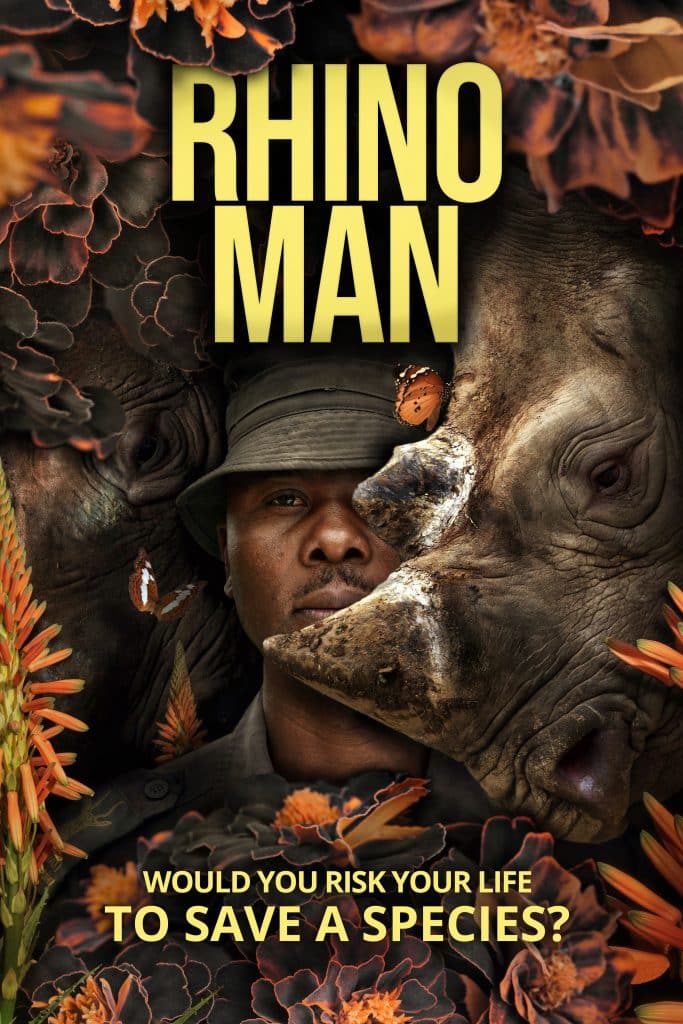
Rhino Man follows Anton Mzimba, who was Head of Ranger Services at Timbavati Private Nature Reserve, and Ruben de Kock, who leads a group of ranger candidates through a selection course at the Southern African Wildlife College. Anton spent 25 years training and leading the rangers who stood between rhinos and the syndicates trying to kill them. In July 2022, while our film was still being finished, he was murdered at his home. That case remains unsolved. There’s an active campaign, Justice for Anton, working to keep pressure on the investigation and support the ranger team and family he left behind.
That’s the part of this story that’s hard for any film built around investigators and crime networks to hold, and it’s not a knock on those films. It just needs a different kind of film, one built on years of trust with the people living it, to show what the front line actually costs.
Where to Watch The Ivory Game
The Ivory Game is streaming on Netflix. If you haven’t seen it and you care about wildlife trafficking, elephants, or the conservation space in general, it’s worth the watch. It’s a genuinely well-made, tense piece of filmmaking, and it gives you a clear-eyed look at how organized the trade actually is.
The Other Side of the Same Fight
The Ivory Game and Rhino Man aren’t trying to tell the same story. Richard and Kief gave you the network. We tried to give you a few of the people standing in front of it.
If you want more of the wider trafficking picture alongside the ranger’s-eye view, I’d also point you to my review of Stroop: Journey into the Rhino Horn War, which covers a lot of the same ground The Ivory Game does, on the rhino horn side specifically.
But if you’re ready to spend time with the people on the ground, you can watch Rhino Man from home, or if you’re part of a campus, company, or community group, you can host a screening and bring the conversation to your own room.
Both films serve the same fight. Watch The Ivory Game for the network. Watch Rhino Man for the people standing in front of it.
Rhino Man is now available for rental and purchase on Apple, Amazon, Google Play, and Vimeo.
By John Jurko II, director of the documentary Rhino Man.
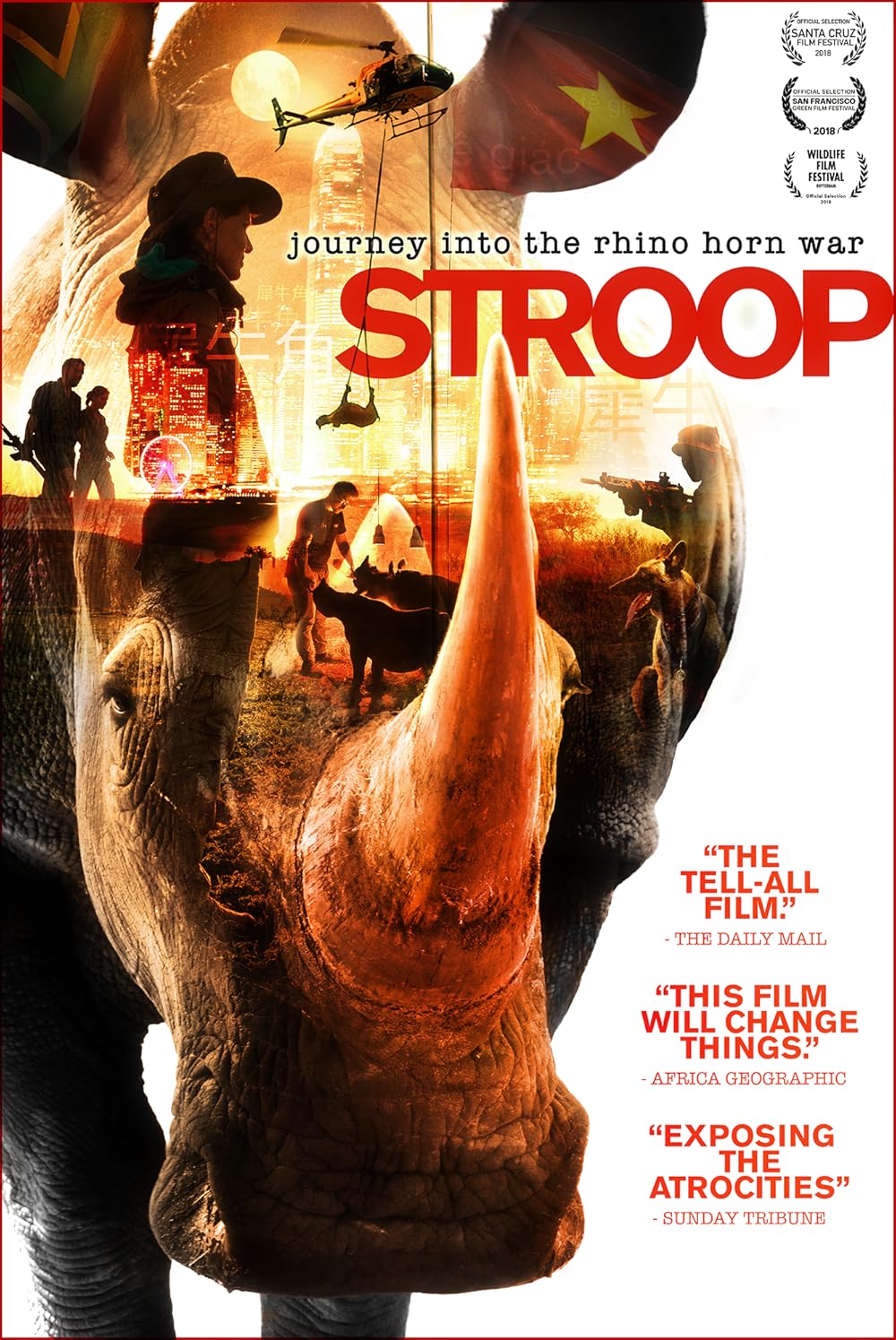
I first watched Stroop: Journey into the Rhino Horn War in 2018, right around the time I was getting seriously involved with what would eventually become Rhino Man. Bonné de Bod and Susan Scott’s film landed in my world at exactly the right moment. I went into our filmmaking process with their work as part of my education, and I’ve been thinking about it ever since.
A lot of people who care about rhinos ask me what other documentaries they should watch. Stroop is almost always near the top of my list. It is, in many ways, still the most complete map of the rhino horn war that anyone has put on screen.
This is my honest reflection on the film, what it taught me as a filmmaker entering this space, and how it shaped some of the choices we ended up making on Rhino Man.
What Stroop Does and Does Comprehensively
Film Facts:
Title:Stroop: Journey into the Rhino Horn War (2018)
Director: Susan Scott
Producer & Presenter: Bonné de Bod
Focus: South Africa’s rhino poaching crisis and the global horn trade
Locations: South Africa, Vietnam, China, Mozambique
Runtime: ~134 minutes
Awards: 30+ international awards
The first thing to understand about Stroop is the ambition of what Susan and Bonné set out to do. Most documentaries about rhino poaching stop where the helicopter lifts off and the carcass cools on the ground. Stroop doesn’t stop. They followed the horn.
They embedded with rangers on the front lines in Kruger and the private reserves. They sat in courtrooms. They visited rhino orphanages and the people raising calves whose mothers had been killed in front of them. They went to Vietnam and China and got undercover footage of the markets and apartments where horn gets sold as a hangover cure, a status symbol, a false cancer treatment. They covered the criminal justice system, the private rhino owners, the rehabilitators, the activists, the consumers.
That’s an enormous amount of ground for one film to hold. And it costs you years to do it. What started as a six-month project became a four-year filming odyssey. Both filmmakers left their jobs, sold their homes, and moved back in with their mothers to finish it. That kind of commitment doesn’t come from a grant cycle — it comes from deciding the story matters more than your own stability.
When I watched Stroop in 2018, what struck me was how much of the landscape it gave you. Not the visual landscape — the situational one. The economic flows, the criminal networks, the legal gaps, the cultural beliefs across continents that keep the demand alive. As someone about to spend years filming this world, it was the kind of grounding I needed. I came out of STROOP with a much clearer sense of what we were actually dealing with.
That breadth is also why Stroop has aged well. The film is over seven years old now and it is still the documentary I point people to when they want to understand the whole shape of the war. The numbers have shifted. The networks have evolved. But the architecture Stroop exposed is still recognizably the architecture today.
Promotional still from Stroop (2025), Copyright Susan Scott.
How Watching It Shaped Some of Our Choices on Rhino Man
Here’s the part I think about most.
When you watch a film as comprehensive as Stroop, you have a choice to make as a filmmaker entering the same subject. You can try to do what they did — cover the whole system, follow the trade end to end. Or you can do the opposite. You can choose to stay very close to one corner of it and try to go deeper there than anyone else has.
We chose the second path on Rhino Man. We chose to stay with the rangers.
We didn’t try to follow the horn to Vietnam. We didn’t sit in courtrooms or interview prosecutors. We didn’t go undercover. We did one thing, and we tried to do it well: live alongside a handful of rangers in South Africa long enough that their lives became the film. The relationships, the families, the fears, the funerals.
That choice was clarified for me partly because of films like Stroop. They had already gone wide. They had already mapped the system. What I felt was missing — and what I had access to, given the relationships our team had on the ground — was the slower, more intimate human story underneath that map. The decade of a ranger’s life. The wife at home who learned to live with the not-knowing. The friend, mentor, and father figure who would eventually be assassinated.
If Stroop gives you the whole architecture of the war, I wanted Rhino Man to give you one of the rooms inside it, lit very carefully, lived in for a long time.
That isn’t a critique of Stroop. It is the opposite. Their choice to go wide made room for films like ours to go narrow. The conservation world needs both kinds of films, and I don’t think the intimate version of this story would have hit the same way without the comprehensive version already existing.
Promotional still from Stroop (2025), Copyright Susan Scott.
Why Stroop Still Belongs at the Top of the Conservation Film Canon
Seven years on, the rhino poaching crisis has not gone away. South Africa lost 499 rhinos in 2023. The rangers I know are still out there. The trade has adapted, the demand has not collapsed, and the criminal economy is still running.
Stroop remains essential viewing for anyone who wants to understand why the war hasn’t ended. If you’re an educator, an NGO program officer, a corporate sustainability lead, or a student trying to understand wildlife trafficking, this is the film I’d recommend first. Pair it with one of the more intimate ranger-focused films — Virunga, Akashinga, or yes, Rhino Man — and you have something close to the full picture.
It’s also a quiet model of what’s possible when two independent filmmakers refuse to walk away from a story. Susan and Bonné did it without a major broadcaster or streamer behind them. They made the film they needed to make, and the world is better for it.
Where to Watch Stroop
Stroop: Journey into the Rhino Horn War is available to rent or buy on Apple TV, Amazon Prime Video, and other digital platforms. It has been broadcast in nearly 100 countries since its release, so availability may vary by region — check your preferred service.
You can learn more about Susan and Bonné’s continuing work at sdbfilms.com.
Promotional still from Stroop (2025), Copyright Susan Scott.
A Companion, Not a Comparison
Stroop and Rhino Man are not the same film, and they were never trying to be. Susan and Bonné gave us the whole crime. We tried to give you a few of the people inside it.
If Stroop helped you understand the scale and system of what’s happening to rhinos, I’d gently invite you to spend time with Rhino Man and meet a few of the people standing inside that system. Anton Mzimba was not a statistic. He was the Head of Ranger Services at Timbavati Private Nature Reserve. He was a husband, a father, and a friend. He was assassinated in July 2022 while our film was still being finished.
That is the part of this war that even the very best wide-lens films can never fully hold. It needs its own film. It needed years of trust. It needed the choice to stay close, even when the story was bigger somewhere else.
Both films serve the same fight. Watch Stroop for the world. Watch Rhino Man for one of the lives inside it.
Rhino Man is now available for rental and purchase on Apple, Amazon, Google Play, and Vimeo.
Watching Rhino (2025) as a Filmmaker Who Lived With Rangers
By John Jurko II, director of the documentary Rhino Man.
I recently watched the new documentary Rhino (2025), narrated by Tom Hardy. A number of people had asked if I had seen it, and given the years I spent filming rangers for Rhino Man, I was genuinely curious how this story would be told.
Whenever a major documentary about rhinos comes out, especially one with a well-known voice attached, it matters. These films shape how the world understands conservation, and more importantly, how they understand the people doing the work on the ground.
So I went in hopeful, and also aware that I would be watching it through a different lens than most viewers.
What the Film Does Well
Film Facts:
Title:Rhino (2025)
Narrator: Tom Hardy
Director: Tom Martienssen
Focus: Black rhino conservation and relocation in Kenya
Locations: Borana & Loisaba conservancies
Runtime: ~83 minutes
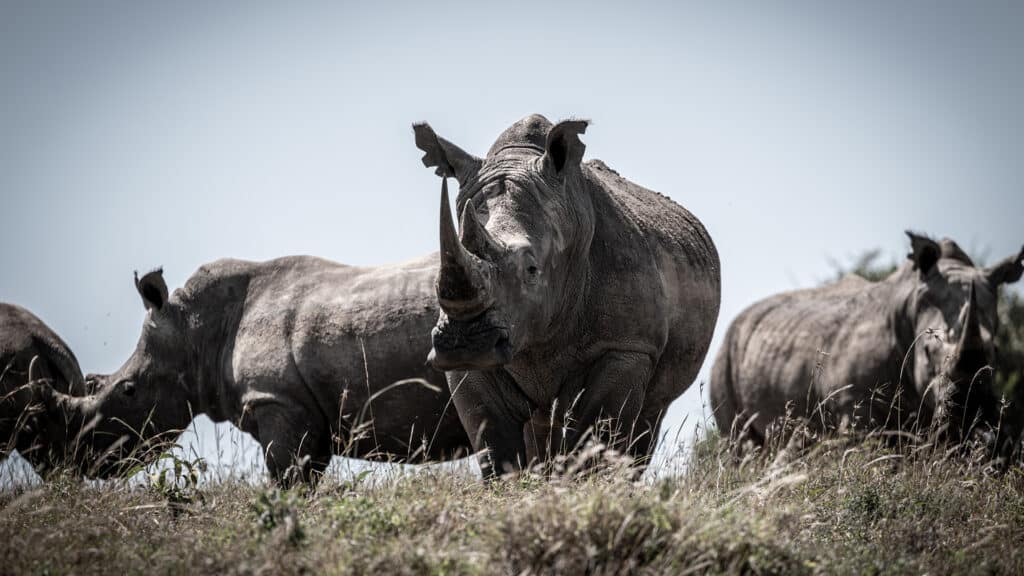
Rhino (2025) is beautifully shot and clearly made with care. The Kenyan landscapes are stunning, and the cinematography gives a real sense of scale and fragility. You feel how exposed these animals are, and how much effort it takes to keep them alive.
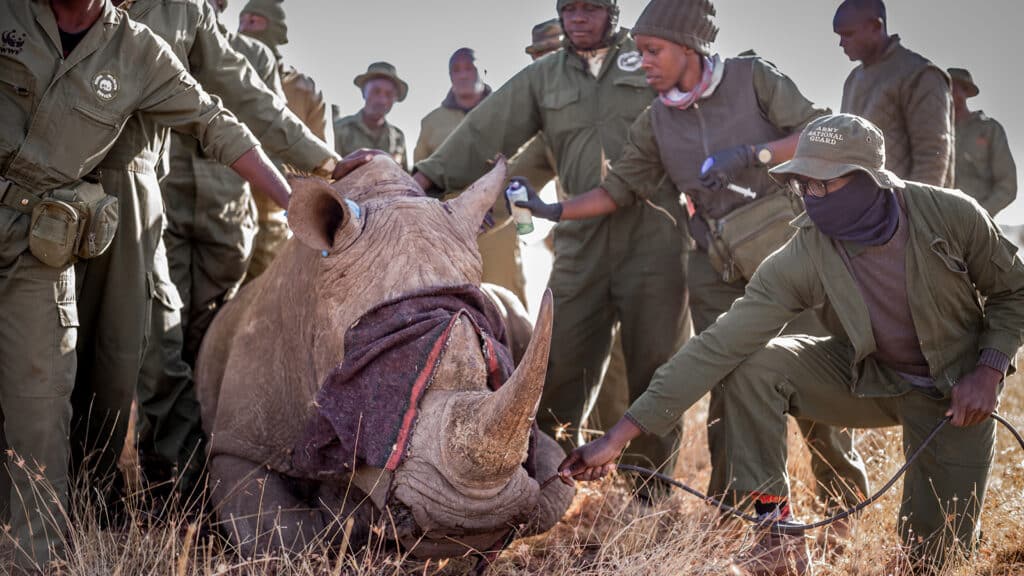
The focus on rhino relocation and population management is also important. Many people assume conservation is simply about stopping poachers. In reality, it is also about genetics, territory, habitat limits, and long-term ecological planning. The film helps illuminate that complexity.
Tom Hardy’s narration brings a certain gravity and accessibility. His presence will draw in viewers who might not otherwise watch a conservation documentary, and that has real value.
Most importantly, the film shows that conservation is not abstract. It is daily work, constant monitoring, and difficult decisions. That part is true.
Promotional still from Rhino (2025), courtesy of Kaleidoscope Film Distribution.
The Part That Is Harder to Capture
At the same time, I was reminded of how difficult it is for any single film to show the full weight of this world.
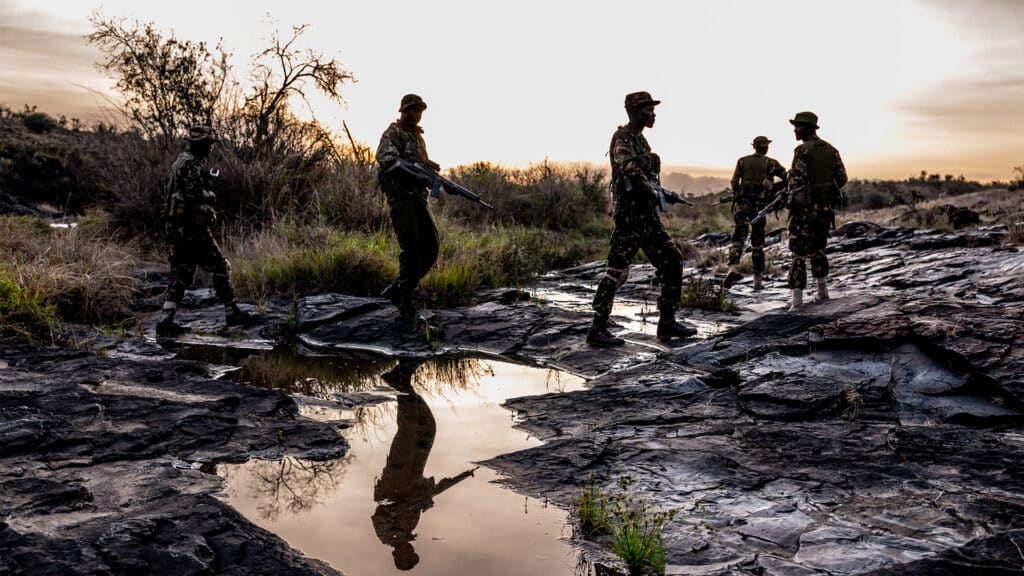
When you spend time with rangers, you realize their job does not end when the camera stops. They live with the pressure. They live with the threats. They carry the psychological toll of knowing that organized criminal networks are often behind the poaching they are trying to stop.
They also carry the responsibility of protecting a global heritage that most of the world will never see in person.
A film like Rhino (2025) can show the mission. It is much harder to show the emotional and personal cost that sits underneath it. That is not a criticism. It is simply the reality of trying to translate this world to screen.
Promotional still from Rhino (2025), courtesy of Kaleidoscope Film Distribution.
Watching It From the Other Side of the Camera
For me, watching Rhino (2025) was less about comparison and more about reflection.
It made me think about the nights in the bush. The long conversations with rangers about fear, duty, and why they keep going. The moments where the stakes were not theoretical.
I thought about Anton Mzimba.
Anton was not a character in a film. He was a real ranger, a husband, a father, a leader. Someone who believed deeply in protecting wildlife and supporting his team. His life and death are part of what shaped our film Rhino Man.
When you know people like that personally, these stories stop being “wildlife stories.” They become human stories.
Why These Films Together Matter
If someone watches Rhino (2025) and walks away caring more about rhinos, that is a good thing. Truly.
Awareness is not trivial. It is often the first step toward change.
Where I see Rhino Man fitting into the larger conversation is in showing the human side more intimately. Not just the mission, but the people who carry it. Their motivations, their families, their risks, and their losses.
One film can show the system. Another can show the soul inside it. Both have a role.
Where to Watch Rhino (2025)
Rhino (2025) has begun its release in cinemas and on digital platforms. In the UK it opened in theaters in late November 2025, and it is currently available to buy or rent on services like Apple TV and similar digital platforms. Viewers in different regions may also find the film on other streaming services as rights windows continue to roll out. :contentReference[oaicite:5]{index=5}
As with many documentaries, theatrical, digital rental, and streaming availability can vary by country, so we recommend checking your preferred platform (Apple TV, Prime Video, Netflix, etc.) if it’s not yet listed.
Promotional still from Rhino (2025), courtesy of Kaleidoscope Film Distribution.
A Simple Invitation
If Rhino (2025) moved you, I would gently encourage you to go deeper. Learn about the rangers. Learn about the realities on the ground. Learn about the people whose names do not appear in headlines.
That is the space where Rhino Man lives.
Not as a counterpoint, and not as a replacement, but as another window into the same fight.
Because in the end, this is not about films. It is about whether these animals, and the people protecting them, still have a future.
Rhino Man is now available for rental and purchase on Apple, Amazon, Google Play, and Vimeo.
We will never sell or give out your information.
We use cookies on our website to give you the most relevant experience by remembering your preferences and repeat visits. By clicking “Accept All”, you consent to the use of ALL the cookies. However, you may visit "Cookie Settings" to provide a controlled consent.
This website uses cookies to improve your experience while you navigate through the website. Out of these, the cookies that are categorized as necessary are stored on your browser as they are essential for the working of basic functionalities of the website. We also use third-party cookies that help us analyze and understand how you use this website. These cookies will be stored in your browser only with your consent. You also have the option to opt-out of these cookies. But opting out of some of these cookies may affect your browsing experience.
Necessary cookies are absolutely essential for the website to function properly. These cookies ensure basic functionalities and security features of the website, anonymously.
Cookie
Duration
Description
cookielawinfo-checkbox-analytics
11 months
This cookie is set by GDPR Cookie Consent plugin. The cookie is used to store the user consent for the cookies in the category "Analytics".
cookielawinfo-checkbox-functional
11 months
The cookie is set by GDPR cookie consent to record the user consent for the cookies in the category "Functional".
cookielawinfo-checkbox-necessary
11 months
This cookie is set by GDPR Cookie Consent plugin. The cookies is used to store the user consent for the cookies in the category "Necessary".
cookielawinfo-checkbox-others
11 months
This cookie is set by GDPR Cookie Consent plugin. The cookie is used to store the user consent for the cookies in the category "Other.
cookielawinfo-checkbox-performance
11 months
This cookie is set by GDPR Cookie Consent plugin. The cookie is used to store the user consent for the cookies in the category "Performance".
viewed_cookie_policy
11 months
The cookie is set by the GDPR Cookie Consent plugin and is used to store whether or not user has consented to the use of cookies. It does not store any personal data.
Functional cookies help to perform certain functionalities like sharing the content of the website on social media platforms, collect feedbacks, and other third-party features.
Performance cookies are used to understand and analyze the key performance indexes of the website which helps in delivering a better user experience for the visitors.
Analytical cookies are used to understand how visitors interact with the website. These cookies help provide information on metrics the number of visitors, bounce rate, traffic source, etc.
Advertisement cookies are used to provide visitors with relevant ads and marketing campaigns. These cookies track visitors across websites and collect information to provide customized ads.